Have you ever run your tongue over your teeth at the end of the day and felt a soft, sticky layer? That layer is called dental plaque—and it’s one of…
What Exactly Is Dental Plaque?
Dental plaque is a soft, sticky film of bacteria that constantly forms on your teeth and gums. It starts building up just a few hours after brushing. Plaque is colorless in the beginning, which is why many people don’t notice it until it causes problems.
So… What Is Plaque Made Of?
Plaque is mainly made up of:
Bacteria
Millions of bacteria live naturally inside the mouth. Some are harmless, while others produce acids that damage teeth and gums.
Food Particles
Tiny leftover food particles—especially carbohydrates and sugars—feed the bacteria.
Saliva Components
Proteins and minerals from saliva mix with bacteria and food debris, helping plaque stick to teeth.
Bacterial Waste Products
As bacteria digest food, they release acids and toxins that irritate gums and weaken enamel.
Why Is Plaque Harmful?
If plaque is not removed regularly, it can lead to:
Cavities
Bacterial acids slowly dissolve tooth enamel.
Bleeding Gums
Plaque irritates gums and causes inflammation.
Bad Breath
Bacteria release unpleasant-smelling compounds.
Tartar Formation
When plaque hardens, it becomes tartar—which cannot be removed by brushing alone.
How Quickly Does Plaque Form?
Plaque begins forming within 4–12 hours after brushing. That’s why brushing only once a day is usually not enough.
Can Plaque Be Removed at Home?
Yes—but only when it is still soft.
You can control plaque by:
- Brushing twice daily
- Flossing regularly
- Cleaning your tongue
- Using mouthwash
- Drinking enough water
What Happens When Plaque Hardens?
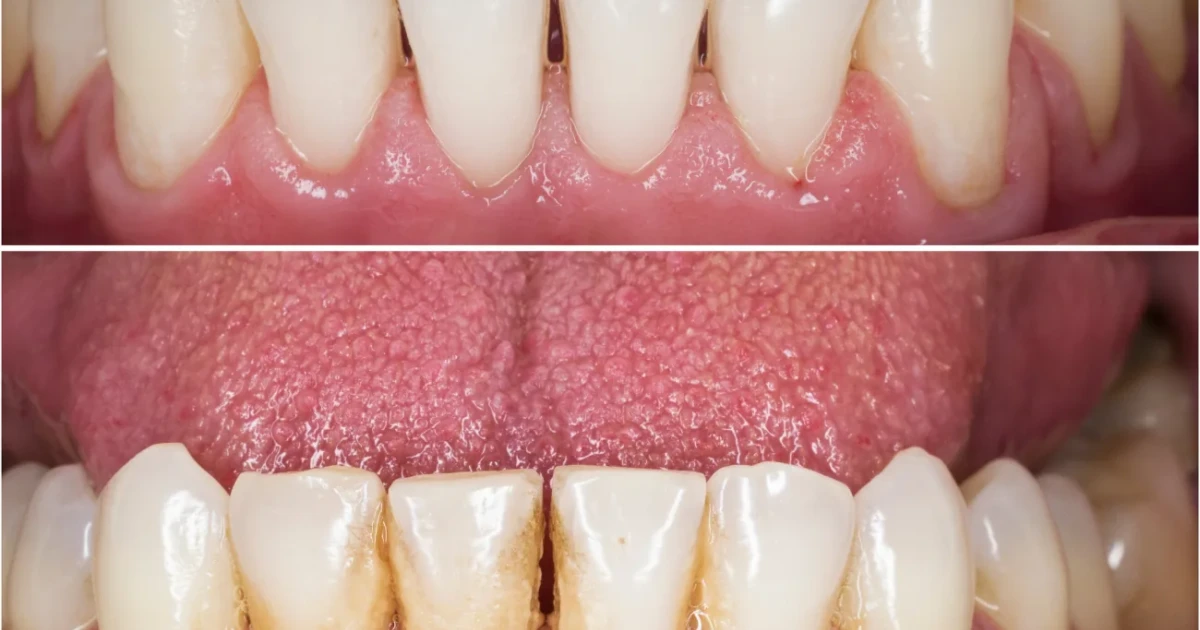
If plaque stays on teeth too long, minerals in saliva make it harden into tartar (calculus). Tartar appears yellow or brown and sticks firmly to teeth. At this stage, only professional dental cleaning (scaling) can remove it.
Signs You May Have Excess Plaque
- Yellow deposits near gums
- Bleeding while brushing
- Bad breath
- Fuzzy feeling on teeth
- Swollen gums
How Dentists Remove Plaque & Tartar
At Lumiere Clinic, Aundh, we use modern ultrasonic scaling techniques to safely remove plaque and tartar while keeping patients comfortable.
Professional cleaning helps:
- Prevent gum disease
- Reduce bad breath
- Protect teeth from decay
- Maintain healthier gums
Final Takeaway
Plaque may seem harmless at first, but it’s actually a living layer of bacteria, food debris, and toxins constantly forming on your teeth.
The good news?
With proper brushing, flossing, and regular dental cleaning, plaque can be controlled easily before it turns into bigger dental problems.
Get Professional Teeth Cleaning in Pune
At Lumiere Clinic, Aundh, we help patients maintain healthy teeth and gums with gentle, painless professional cleaning and preventive dental care.
Trusted resources
For additional reading from established medical organisations:
Further reading
Continue with these related notes from The Journal:
- Toothache: Causes, Symptoms, and When to See a Dentist
- Teeth Cleaning: What It Is, Why You Need It, and How Often
- Teeth Cleaning: The Habit Behind Long-Lasting Oral Health
Talk to Lumiere Clinic
If this sounds familiar, get in touch or explore our dentistry care and doctor profiles in Aundh, Pune.
Lumiere Clinic
Editorial
Practical notes on dental health, prevention, and everyday wellbeing from the Lumiere Clinic team in Aundh, Pune.