Oral Microbiome: How Good and Harmful Bacteria Affect Your Oral Health
Your mouth is home to hundreds of different bacterial species. Some help maintain a healthy environment, while others can contribute to cavities, gum disease and bad breath. Discover what lives inside your mouth, what disturbs this delicate balance and how it may connect to your overall health.
Your Mouth Has Its Own Good Bacteria: Why Protecting Them Matters
H1: The Oral Microbiome: Understanding the Natural Balance Inside Your Mouth
Your mouth is home to millions of tiny living microorganisms. Some can contribute to tooth decay and gum problems, but many are harmless residents that form part of a healthy oral environment.
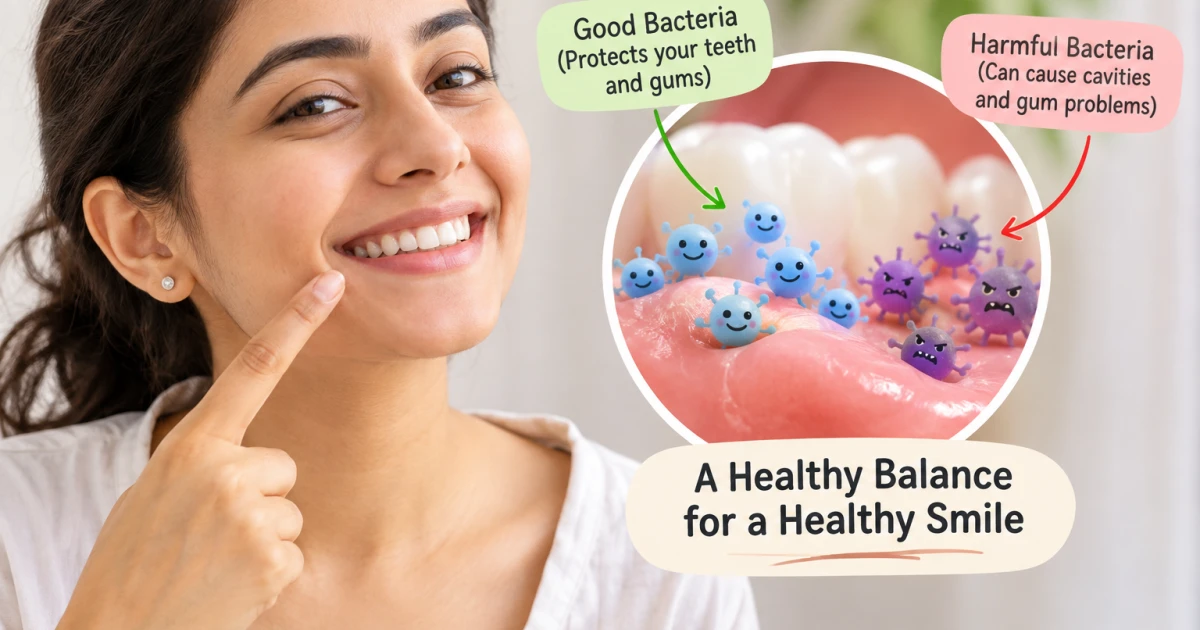
Here is something interesting: a healthy mouth is not a mouth without bacteria. It is a mouth where microorganisms live in a balanced environment.
Think of them as a small natural ecosystem. Just as your gut has helpful bacteria that support digestion, your mouth also has microorganisms that interact with saliva, teeth, gums and food. This natural community is called the oral microbiome.
Why does this natural balance matter?
Not all bacteria in your mouth are harmful. Many live naturally on your tongue, teeth and gums without causing problems. Some even compete with harmful bacteria for space and nutrients.
Problems can develop when this balance is disturbed.
For example:
- When sugary foods and drinks are consumed frequently, certain bacteria produce acids that gradually weaken tooth enamel and increase the risk of cavities.
- When plaque is allowed to build up along the gumline, it can trigger inflammation, leading to bleeding and gum disease.
- When the mouth becomes dry, there is less saliva to wash away food particles, neutralise acids and protect the teeth.
The important point is that oral health depends not only on removing plaque, but also on maintaining a healthy environment inside the mouth.
What can disturb the oral microbiome?
Some everyday habits can make the oral environment less healthy:
Frequent sugar intake: Repeated exposure to sugary snacks and drinks encourages acid-producing bacteria.
Inadequate cleaning: Plaque can accumulate when brushing and cleaning between teeth are inconsistent.
Dry mouth: Certain medicines, dehydration and some health conditions can reduce saliva.
Tobacco use: Smoking and chewing tobacco can negatively affect the gums and the oral microbial environment.
Unnecessary use of strong antiseptic products: Using antimicrobial mouthwashes without a clear reason may affect the natural microbial community.
Can your oral-care products disturb this balance?
This is where choosing the right products becomes important.
The aim of oral hygiene is to control harmful plaque while protecting the natural functions of the mouth—not to sterilise it.
1. Choose a fluoride toothpaste
Fluoride helps strengthen tooth enamel and prevent cavities. Brush twice daily for two minutes. Regular fluoride toothpaste is an important part of preventive dental care.
2. Do not use strong antiseptic mouthwash routinely without a reason
Some mouthwashes are designed to reduce specific bacteria and can be useful in certain situations. However, stronger antiseptic rinses, such as chlorhexidine, are generally intended for specific dental needs and should be used for the duration advised by a dentist. Prolonged or unnecessary use can cause problems such as staining and taste changes.
Not every mouthwash is harmful, and not every person needs one. The right choice depends on your oral health.
3. Be careful with products promising instant whitening or freshness
Whitening products and strong flavouring do not automatically mean better oral health. Avoid excessive use of abrasive powders, harsh scrubs or unverified home remedies. They may irritate the mouth or damage tooth surfaces if used incorrectly.
4. Avoid over-cleaning
Brushing harder, repeatedly scrubbing the tongue or using several cleansing products does not make the mouth healthier. Gentle, consistent cleaning is more useful than aggressive cleaning.
Five simple ways to support a healthy oral environment
Brush twice daily with a fluoride toothpaste and a soft-bristled toothbrush.
Clean between your teeth every day using floss or suitable interdental brushes.
Drink enough water and support healthy saliva production.
Limit frequent sugary snacks and sweetened drinks.
Avoid tobacco and use mouthwash or other specialised products only when appropriate.
Regular dental check-ups also help identify plaque build-up, gum inflammation, dry mouth and early signs of dental problems.
Does your mouth affect your overall health?
Your mouth is connected to the rest of your body. For example, diabetes and gum disease can influence one another, and research has found associations between gum disease and certain general health conditions.
This does not mean that oral bacteria directly cause every systemic illness. It does remind us that healthy gums and good oral hygiene are an important part of looking after overall health.
The takeaway: Protect the balance, not just the teeth
A healthy oral environment is supported by good saliva flow, balanced nutrition, gentle cleaning and the right dental products.
You do not need to eliminate every microorganism from your mouth. You need to create conditions in which harmful plaque is controlled and the natural oral environment can function well.
At Lumiere Clinic, Aundh, Pune, we believe preventive dentistry begins with understanding your mouth. The right oral-care routine should protect your teeth and gums while respecting the natural balance that supports them.
A healthier mouth is not about killing every germ. It is about maintaining the right balance.
Lumiere Clinic
Editorial
Practical notes on dental health, prevention, and everyday wellbeing from the Lumiere Clinic team in Aundh, Pune.