Hair Thinning or Hair Fall? Understand the Difference and What Your Hair May Be Telling You
Noticing more hair on your pillow or feeling that your ponytail has become thinner? Hair fall and hair thinning are related but different concerns. Learn how to identify the difference, understand their common causes and know when to seek professional advice.
Content
Is your hair falling more, or is it gradually becoming thinner?
You notice more hair strands in the shower, on your pillow or while combing. At the same time, your ponytail feels smaller and your scalp seems more visible than before.
Are these signs of the same problem?
Not necessarily.
Hair fall and hair thinning are often used interchangeably, but they describe two different changes in the hair cycle and overall hair density. Understanding the difference is the first step towards choosing the right approach to hair care.
1. What is hair fall?
Hair fall generally refers to increased hair shedding, where more strands than usual are released from the scalp.
Losing approximately 50–100 hairs a day is generally considered normal, although this varies between individuals and washing habits.
When shedding becomes excessive, one common cause is a condition called Telogen Effluvium.
It may occur a few months after:
Physical or emotional stress.
High fever or a significant illness.
Childbirth or hormonal changes.
Rapid weight loss or restrictive dieting.
Nutritional deficiencies, such as iron deficiency.
Certain medications or medical conditions.
People with excessive hair fall often notice more strands while washing, brushing or running their fingers through their hair.
In many cases, shedding is temporary, and hair growth gradually recovers once the underlying trigger is addressed.
2. What is hair thinning?
Hair thinning refers to a gradual reduction in hair density or the thickness of individual hair strands.
Instead of simply losing more hair, the hair may become finer, shorter and less dense over time.
One common cause is Androgenetic Alopecia, also known as hereditary or pattern hair loss.
It can affect both men and women.
Common signs include:
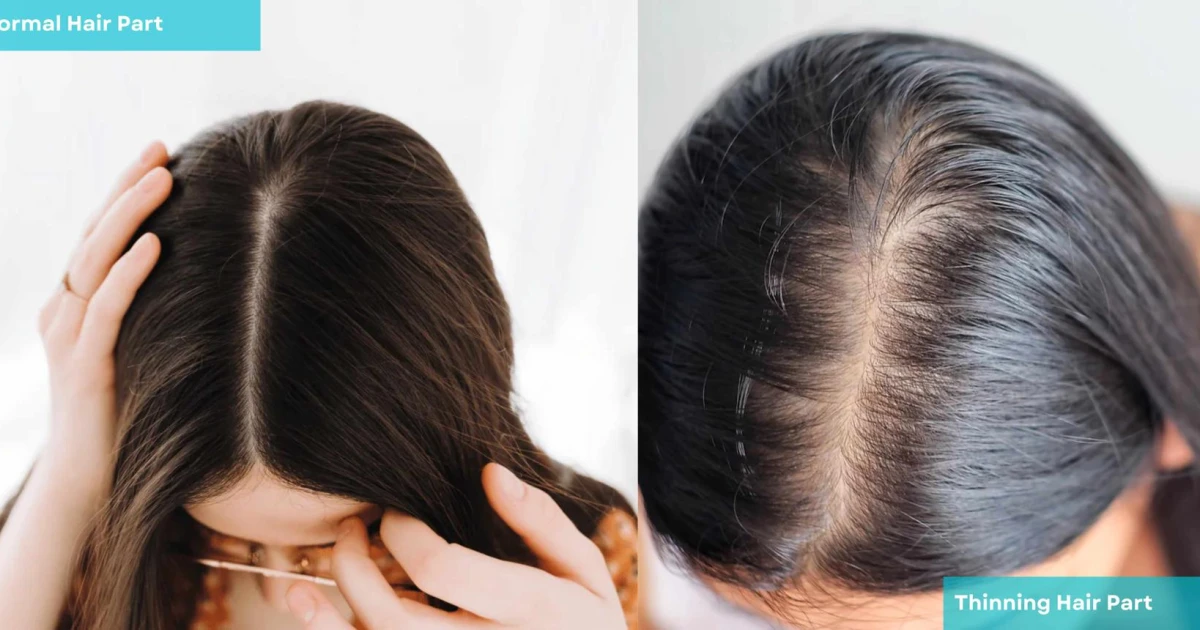
A widening hair parting.
Reduced volume at the crown.
A receding hairline in men.
A smaller ponytail or reduced overall hair density.
Increasing visibility of the scalp.
In this condition, genetically susceptible hair follicles gradually become smaller, producing finer and shorter hairs.
Unlike temporary shedding, pattern hair thinning may progress without appropriate management.
Feature | Hair Fall | Hair Thinning |
|---|---|---|
Main change | Increased shedding | Reduced hair density |
Onset | Often noticeable over weeks Usually gradual | Usually gradual |
Common signs | More hair on pillow or brush | Wider parting, less volume |
Common cause | Stress, illness, nutritional issues | Genetics, hormonal and medical factors |
Pattern | Often spread across the scalp | May follow a particular pattern |
Recovery | Often improves after the trigger resolves | May need ongoing treatment |
An important point: both conditions can occur together. Excessive shedding may also make an existing pattern of hair thinning more noticeable.
4. Can lifestyle and nutrition affect hair health?
Yes. Hair growth is influenced by overall health, nutrition and hormonal balance.
Some factors that may contribute to hair concerns include:
Inadequate protein intake.
Iron or other nutritional deficiencies.
Thyroid disorders.
Hormonal changes.
Chronic stress and inadequate sleep.
Crash dieting and rapid weight loss.
Frequent heat styling, chemical treatments and tight hairstyles.
However, not every hair concern is caused by a nutritional deficiency. Supplements should only be taken when there is a clear need, ideally after appropriate assessment.
5. How do you know which condition you have?
Looking at the amount of hair in your comb alone cannot establish the cause.
A professional hair and scalp assessment may include:
Understanding when the problem started and how it has progressed.
Examining the scalp and hair density.
Assessing the hairline and parting pattern.
Reviewing medical history, recent illness, medications and lifestyle.
Considering blood investigations, such as thyroid function, iron status or other tests, when clinically indicated.
Trichoscopy, a magnified examination of the scalp and hair follicles, when required.
Identifying the underlying cause is more important than immediately choosing a hair serum, shampoo or treatment.
6. When should you seek professional advice?
Consider an assessment if you notice persistent or increasing hair fall, gradual thinning, a widening parting or reduced hair density.
Do not ignore sudden bald patches, scalp pain, redness, scaling, intense itching or areas that appear smooth or scarred. These may require prompt medical evaluation.
The right approach begins with understanding the cause
Hair fall and hair thinning may look similar, but they do not always have the same cause or treatment.
At Lumiere Clinic, Aundh, Pune, we believe that hair care should begin with understanding the scalp, hair growth pattern and individual concerns before considering treatment options.
Rather than following every trending hair remedy, focus on identifying what your hair actually needs.
Healthy hair care begins with the right diagnosis, not just the right product.
Lumiere Clinic
Editorial
Practical notes on dental health, prevention, and everyday wellbeing from the Lumiere Clinic team in Aundh, Pune.