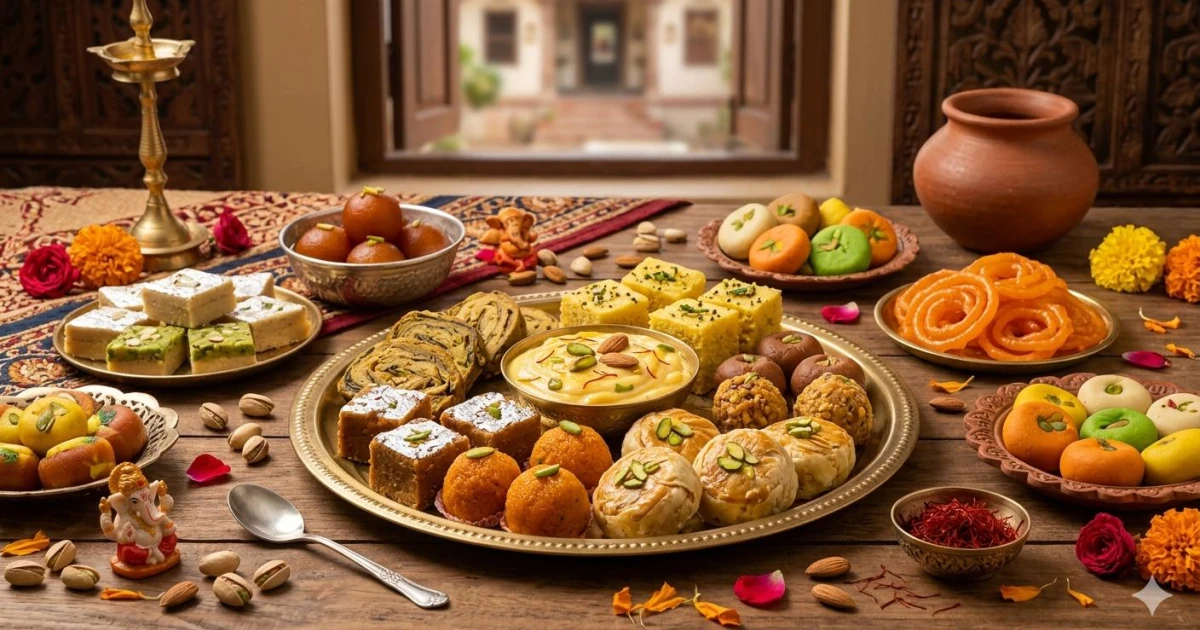
Some Indian festival sweets can cling to teeth longer than others. Discover five popular mithai varieties, understand their connection to tooth decay and learn simple ways to protect your smile.
Why do some festival sweets stay on your teeth?
Have you ever noticed how some sweets remain stuck to your teeth even after you've finished eating?
Sticky and sugary foods can cling to tooth surfaces or become trapped between teeth. Bacteria in dental plaque use these sugars to produce acids, which gradually weaken enamel and contribute to cavities.
Here are five popular Indian sweets that deserve a little extra attention.
1. Chikki – The sticky combination
Chikki combines nuts with concentrated jaggery or sugar syrup. Its firm, sticky texture can leave residues around the back teeth and between teeth.
Dental tip: Break chikki into small pieces instead of biting into a hard slab, especially if you have sensitive teeth or dental restorations.
2. Gulab Jamun – Soaked in sugar syrup
Gulab jamun's sugar syrup can coat tooth surfaces, particularly around the back teeth. Frequent consumption increases the number of times teeth are exposed to sugar.
Dental tip: Enjoy it with a meal rather than repeatedly snacking on it throughout the day. Rinse your mouth with water afterwards.
3. Jalebi – A sugary coating that lingers
Jalebi combines a crisp texture with concentrated sugar syrup. Its sugary coating can remain around the teeth, while frequent snacking creates repeated opportunities for acid production.
Dental tip: Enjoy your portion at one time rather than eating small pieces throughout the day.
4. Anjeer and date rolls – Natural sugar is still sugar
Dates and figs contain natural sugars, but their chewy texture can make them stick to teeth. Dried fruits are not automatically harmless to dental health.
Dental tip: Have these sweets with meals and clean between your teeth regularly.
5. Peda and barfi – The overlooked favourites
Milk-based sweets such as peda and barfi may leave food residues around the teeth. Their added sugar can also contribute to tooth decay, even when they do not feel particularly sticky.
Dental tip: Enjoy them in moderation, rinse with water afterwards and maintain regular brushing.
Is stickiness the only reason sweets cause cavities?
No. Tooth decay is influenced by several factors, including plaque bacteria, sugar exposure, saliva, fluoride and oral hygiene.
One important factor is how frequently you consume sugar. Eating small amounts repeatedly throughout the day can expose your teeth to repeated acid attacks.
5 simple ways to protect your teeth during festivals
Enjoy sweets with meals: Avoid frequent sugary snacking between meals.
Drink water: Rinse your mouth with plain water after eating.
Brush twice daily: Use fluoride toothpaste and brush for two minutes.
Clean between teeth: Use dental floss or interdental brushes to remove trapped food and plaque.
Don't ignore sensitivity: Recurring food trapping or discomfort deserves a dental assessment.
When should you visit a dentist?
If you experience repeated food trapping, sensitivity, pain while chewing, visible cavities or bleeding gums, consider a dental examination. These symptoms can have different causes and should be assessed rather than self-diagnosed.
Enjoy your sweets. Take care of your smile.
You don't have to give up traditional mithai to maintain healthy teeth. Being mindful of sugar frequency and following a consistent oral hygiene routine can help protect your long-term dental health.
At Lumiere Clinic, Aundh, Pune, we believe in preventive dentistry, patient education and personalised care. Regular dental examinations help identify concerns early and support informed decisions about your oral health.
Lumiere Clinic – Aundh, Pune
Expert-led dental care focused on prevention, precision and patient comfort.
Lumiere Clinic
Editorial
Practical notes on dental health, prevention, and everyday wellbeing from the Lumiere Clinic team in Aundh, Pune.